Hoarding joy
Saving kernels of happiness against the lean times
This is my second post, and if this is the first one you’re reading, welcome! The first post is here, it explains who I am and what I’m doing here. But TLDR I’m a longtime journalist obsessed with disaster preparedness, getting a Master of Science in Emergency Management at John Jay College.
I first started thinking about disaster twenty years ago, after Hurricane Katrina. My beloved friend Deepa Fernandes and I were teaching audio journalism in the Gulf Coast, helping community organizations tell their own stories about their experiences. We saw so much loss, and so much creativity, and community, and so much institutional neglect.
We were also reporting, and I remember knocking on doors in a trailer park outside of Biloxi. Almost everyone had been evacuated, it was weeks after the storm. But one woman opened her door and let us in, and we sat and talked a while. She was doing okay, she said, but the one thing she wanted was something fresh to eat, after weeks of cans. What she really wanted was an orange.
About ten years later, sometime during the 2015 presidential campaign, I circled back to disaster. I bought a lot of prepper books, and reading through them, I realized that none of them talked about feelings. Terror. Anger. Grief. Loss. Hope. The feelings we saw on the Gulf Coast, and other places since.
This seemed deranged to me. If my community was damaged, if neighbors or friends or loved ones were missing or dead, I would be an absolute wreck. Maybe I would be able to keep going, maybe not. Even if I could put my trauma to the side, it would still need to get handled when the space opened up. The only book I had that acknowledged the existence of emotions was the only one written by a woman. The section on feelings was two pages.
In 2020, an estimated 100,000 million people experienced a disaster event, either human-made or natural - defined as “unexpected and uncontrollable events that have a major impact on people’s personal, social, economic, and well-being aspects of their lives.” And of those, about a third may experience a “negative mental health consequence.” So, thinking about feelings isn’t just an extra, a bonus thing. It’s essential.
In the years since those first readings, I’ve found more people thinking about emotions and disaster. It’s not in most how-to books, but people in emergency management write a lot about mental health and disaster. How people can shut down in a crisis, and how to keep them going, and how to be tender in the work.
And about the importance of joy. We need to cultivate joy before the storms hit (harder), so that we can draw on its memory to keep us going and keep us loving. We need to pack joy into our go bags - a favorite candy, a poem, a t-shirt from a favorite event. An orange (metaphorically - don’t put things that rot into your go bag).
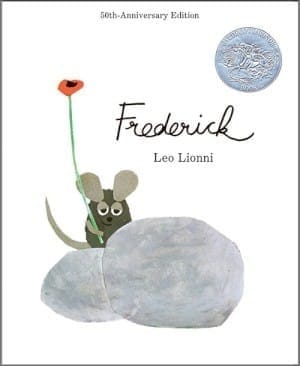
The best book I've found on the importance of joy in crisis is a picture book called Frederick, by Leo Lionni. A group of mice are gathering supplies for winter - straw, corn, seeds. And one mouse, Frederick, just basks in the sunshine and stares at the flowers. The other mice chastise him, telling him to be useful. But inside their stone wall, in the depths of winter, when the corn and the seeds have run out, Frederick keeps them going with his poems and his words and his songs, kindling their memories of sunshine and warmth and plenty.
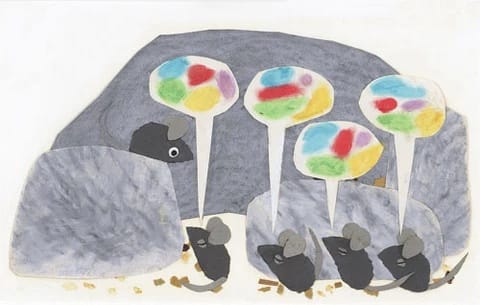
It takes both, the seeds and the joy, to keep them going through the coldest days. It takes both the seed savers and the storytellers.
It can feel frivolous to invest in joy. But it’s essential. Joy helps us remember why we’re working so hard to survive.
In the coming weeks, I’ll share practical things as well as philosophical ones, but to me, the how-to without the why is how we get into hoarding MREs instead of weaving a web of community.
Things bringing me joy
I read a lot about disasters and all the bad things that can happen, both for school and out of general interest. So as a counterpoint, I read a *lot* of genre fiction - sci-fi, cosy mysteries, romance. There’s a great episode of Ann-Helen Peterson’s podcast Culture Study where she talks to the people who own the romance bookstore mini-chain The Ripped Bodice, and they discuss how genre fiction can be really comforting in hard times because it often follows a set pattern. Anyway, I just read an easy-breezy book called The Spell Shop, about a young librarian who flees the capitol city after an attempted revolution, and escapes with a bunch of spell books to her childhood island. It’s a sweet fantasy-romance-adventure, and/but it’s also about how hoarding knowledge is bad, how community keeps you safe, how creating webs of care is a path to individual and collective safety. Recommend! I also read The Ten Thousand Doors of January, another sci-fi-ish adventure, tenser and deeper than the Spell Shop, about the dire need to be big and bold and brave when dark forces want to make us small, and the value of free movement for our souls. Finished it weeping and inspired.
What’s coming up?
I’m knee-deep in research about the role of trust in disaster preparedness, response and recovery, among people with legal immigration status and those without it. I can’t wait to share it with you! And thinking about how to bring community together to discuss disaster mutual aid, and how to support others in those conversations. I also keep a pretty close eye on what’s going on at FEMA, and I’ll work on a roundup of Where We Are With All That soon.